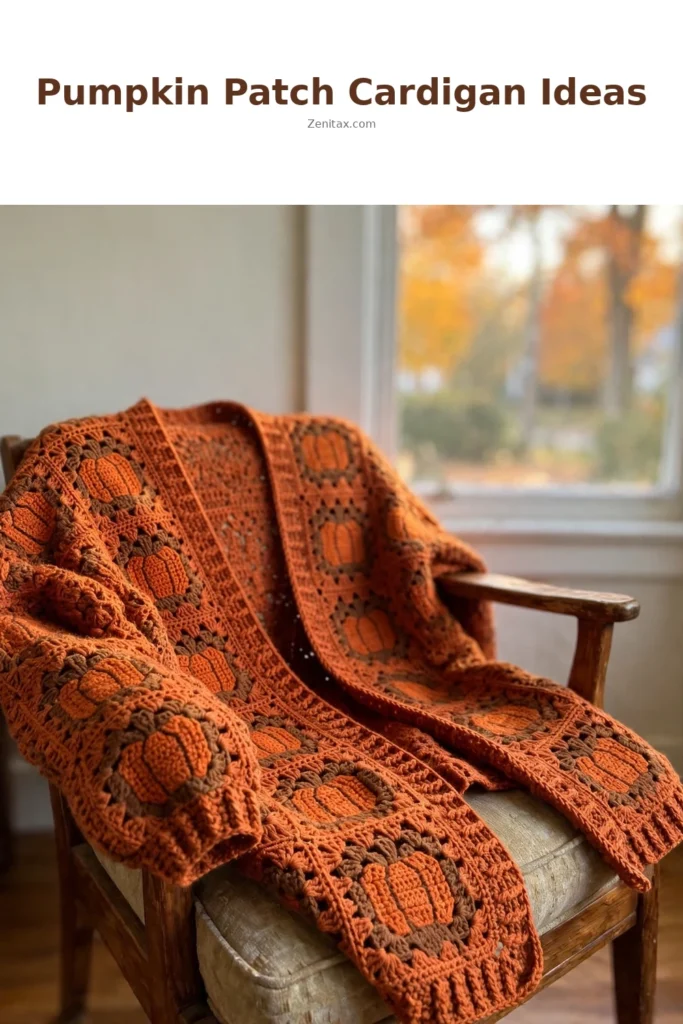
A pumpkin patch cardigan can be literal, with pumpkin-shaped colourwork, or simply capture the season through harvest shades, textured panels, roomy pockets, and comfortable layers. These eight crochet ideas include belted mosaic coats, patchwork constructions, hooded hexagon styles, cropped button cardigans, puff-stitch textures, and long dusters. Each option offers a different balance of warmth, movement, and visual detail for orchard walks, autumn photos, market visits, or everyday wear.
Alongside each idea, I explain what to check in the fit, how the fabric may behave over other clothes, which features add bulk, and where colour changes can create a stronger pumpkin-patch look without altering the basic construction.
Quick List
- Mosaic Pumpkin Crochet Cardigan with Belted Shape
- Harvest Patchwork Crochet Cardigan with Mixed Textures
- Campfire Hexagon Crochet Cardigan with Hood
- Chunky Buttoned Crochet Cardigan with Waffle Texture
- Puff Stitch Crochet Cardigan in Pumpkin Orange
- Hooded Fall Crochet Cardigan for Breezy Outings
- Longline Autumn Crochet Cardigan with Deep Pockets
- Balloon Sleeve Crochet Cardigan for Mild Fall Days
How to Choose a Crochet Pumpkin Patch Cardigan for Fit and Layering
Start with the layers you expect to wear underneath. A cardigan planned for a T-shirt needs less room than one intended for a flannel shirt or lightweight sweater, so compare the tutorial’s finished measurements with a garment that already fits the way you like. Next, consider length. Cropped shapes work well with high-rise trousers and dresses, while long dusters offer more coverage but may brush against damp grass or muddy paths.
Fabric density also changes comfort. Open granny stitches provide ventilation and show the layer beneath; puff stitches, mosaic colourwork, and close-set textured rows create a fuller fabric that may feel warmer. Check sleeve depth as carefully as bust width, especially with balloon, slouchy, or hooded designs. Finally, assess closures and pockets. Buttons give a neater front but need stable bands, belts allow flexible shaping, and large pockets add usefulness as well as weight. Swatch, block, and measure before final assembly because crochet fabric can relax noticeably after handling.
1. Mosaic Pumpkin Crochet Cardigan with Belted Shape
Design Details
Inset mosaic colourwork gives this crochet cardigan a clear pumpkin-season identity without relying on separate appliqués. The design combines patterned panels with practical pockets, a tie belt, and a broad ribbed collar. Its body is worked flat in one piece before the cuffs and collar are added, creating a long, coat-like outline.
Fit and Finish
This option suits readers who want the pumpkin motif to be the main feature. Keep the contrast strong enough for the mosaic shapes to remain readable, or use cream, burnt orange, and deep brown for a softer harvest palette. The belt can define the waist over a thin top or sit loosely over heavier layers. Mosaic rows demand steady chart reading, so colour placement and row tracking deserve more attention than the basic silhouette.
2. Harvest Patchwork Crochet Cardigan with Mixed Textures
What Stands Out
This crochet cardigan is assembled from patchwork blocks rather than one continuous fabric. The design mixes five square treatments, including single crochet, herringbone half double crochet, moss stitch, ribbing, and additional textured sections. Different block sizes create an irregular, quilt-like surface, while flat mattress-stitch joins keep the grid from becoming excessively bulky.
Customisation Idea
A pumpkin-patch palette can move from squash orange and mustard to oat, bark brown, moss, and muted plum. Repeating one neutral around the garment will help varied textures feel connected. This style suits anyone who enjoys portable pieces and colour planning, but it creates more joining work than a panel cardigan. Check every block after blocking rather than trusting row counts alone; mismatched square dimensions can pull the shoulders or distort the front opening.
3. Campfire Hexagon Crochet Cardigan with Hood
Construction Focus
Two granny hexagons form the chest and shoulders of this hooded crochet cardigan. Additional granny-stitch rows extend the body and sleeves, then a rectangular hood and simple border complete the shape. The original earthy striping already suits an outdoor autumn setting, and the radiating hexagon lines give the back and sleeves a relaxed bohemian look.
Best Use
Choose this idea for casual pumpkin picking, campfire evenings, or layered weekend outfits. Olive, camel, rust, and cream can preserve the woodland effect, while a brighter orange stripe makes the seasonal theme more obvious. Because granny stitch contains open spaces, the cardigan works best over a visible base layer and may not block wind like a denser fabric. The hexagon construction is adjustable, but both halves must match closely before seaming or the hood and hem can sit unevenly.
4. Chunky Buttoned Crochet Cardigan with Waffle Texture
Why It Works
A cropped, boxy shape keeps this chunky crochet cardigan visually balanced despite its strong texture. Alternating front-loop and back-loop half double crochet creates a waffle-like surface, while the V-neck, large buttons, and separately made buttonhole ribbing give the front a structured finish. The source also includes broad size coverage and a full video demonstration.
Before You Choose
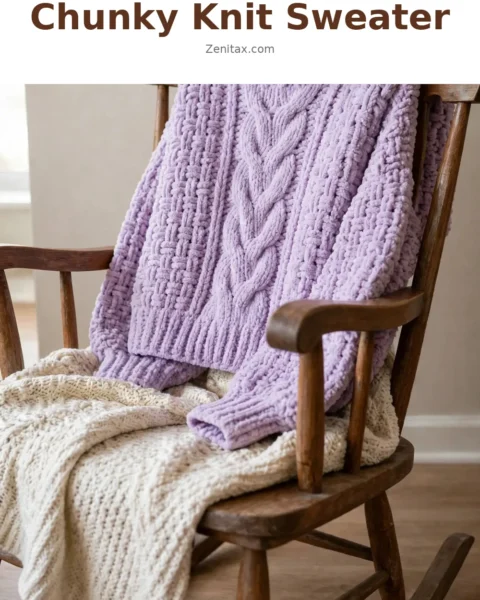
This is a useful option for high-rise jeans, skirts, or a simple dress because the shorter hem avoids hiding the waist. Change the lilac sample concept to pumpkin, cinnamon, or dark berry for a more obvious patch-day palette. Bulky yarn and dense texture can feel substantial, so check sleeve width over the clothes you plan to wear. Button spacing also matters: a band that pulls or ripples will interrupt the clean V shape, making careful blocking and placement worthwhile.
5. Puff Stitch Crochet Cardigan in Pumpkin Orange
Design Details
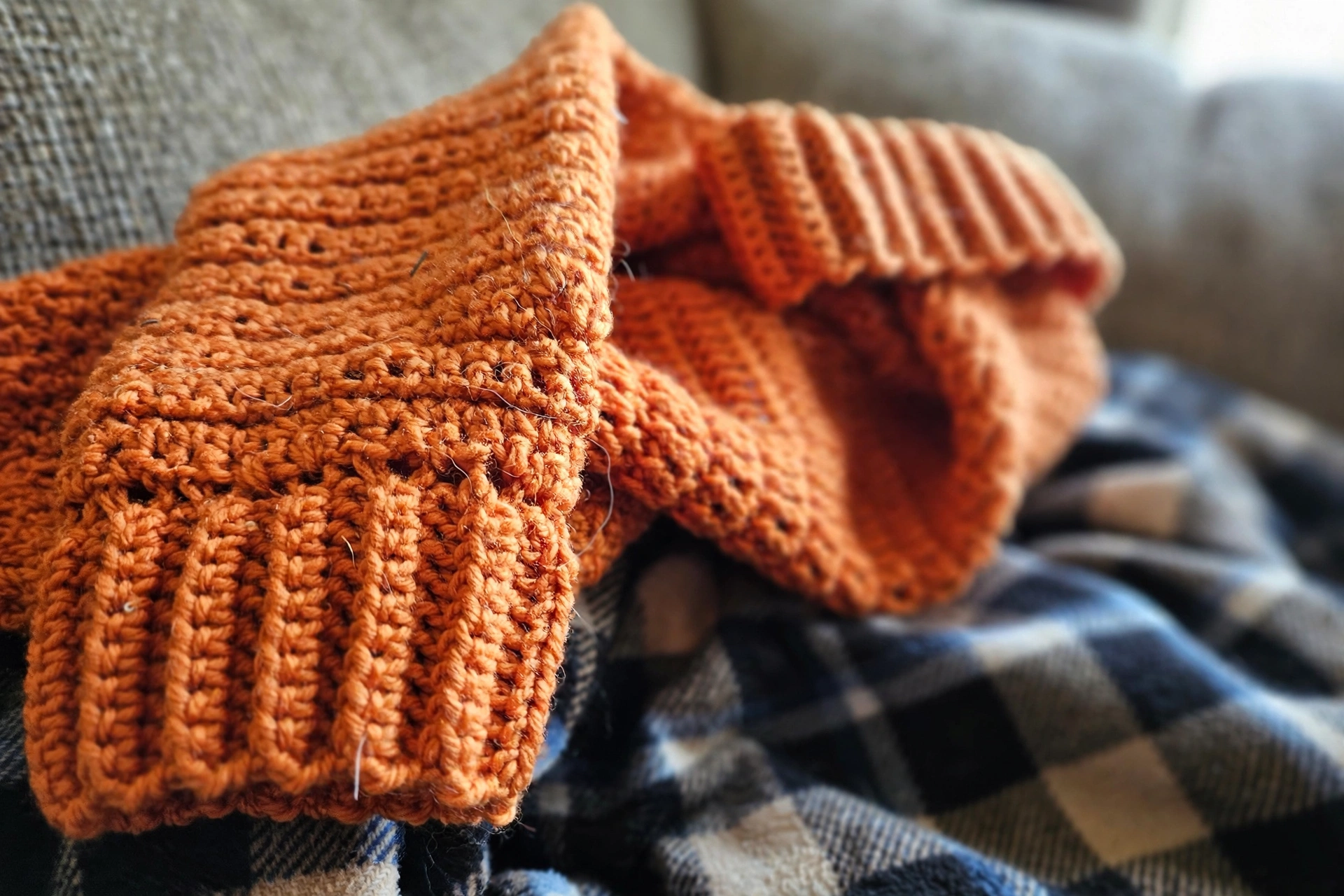
Puff stitches add raised dots across this crochet cardigan, giving a plain fall colour more depth without using multiple shades. Ribbing at the waist, cuffs, and neck frames the textured body. The construction begins from the lower edge in one main panel, splits for the upper front and back, and uses separately worked sleeves joined to the body.
Who It Suits
This version works for readers who prefer texture over motifs. Pumpkin orange, toasted caramel, or warm cream would let the puff rows catch light in orchard photographs while remaining easy to coordinate with denim. Puff stitches use more yarn and can make the fabric heavier than a basic double-crochet cardigan, particularly at longer lengths. A generous swatch will show whether the chosen fibre keeps the puffs rounded and whether the ribbing has enough recovery to hold the hem and cuffs neatly.
6. Hooded Fall Crochet Cardigan for Breezy Outings
Best Use
A full hood makes this crochet cardigan practical for breezy farm visits and cool evening walks. The garment starts with ribbed hems, builds the back and two fronts upward, and adds sleeves, a seamed hood, and continuous inner ribbing around the opening. The repeated crossed-looking texture gives the surface more definition than plain rows.
Practical Point
Russet, chestnut, or deep pumpkin would reinforce the autumn mood, while a neutral hood lining layer underneath can brighten the face in photographs. The hood can be lengthened before seaming, which helps readers who prefer extra depth. It also adds weight behind the neckline, so secure shoulder seams and even ribbing are important. This design does not rely on a front closure, making it easy to throw on, but it may swing open in wind unless styled with a scarf or an added removable belt.
7. Longline Autumn Crochet Cardigan with Deep Pockets
What Stands Out
This longline crochet cardigan uses three rectangular body panels, sleeves worked onto the arm openings, a ribbed collar, and patch pockets. Half double crochet gives the fabric a close, plain surface, while the extended hem creates more coverage than a hip-length cardigan. Pocket size and overall length can be adjusted.
Care Note
A duster suits chilly pumpkin-patch visits when warmth and storage matter more than a compact silhouette. Deep rust, cocoa, or heathered oatmeal would emphasize its classic fall shape. The long hem is the main trade-off: it can collect moisture, dust, or bits of straw on outdoor paths. Choose a length that clears the ground when sitting and climbing steps, and reinforce pocket corners if they will hold a phone or keys. Blocking the panels to matching dimensions will also make the front edges hang more evenly.
8. Balloon Sleeve Crochet Cardigan for Mild Fall Days
Fit and Finish
A drapey body and balloon sleeves give this crochet cardigan a lighter alternative to thick autumn layers. The version uses a simple panel construction, ribbed sleeve sections, and neckline finishing, with the back continuing into the front panels before separate sleeves are attached. Its relaxed shape suits mild afternoons when a heavy coat feels excessive.
Colour Direction
Use muted pumpkin, clay, golden wheat, or sage to shift the airy design toward a pumpkin-patch wardrobe. The volume at the sleeves pairs best with a streamlined base layer, and the open front keeps the look casual over dresses or jeans. Smooth cotton-blend yarn can show clear stitches and fluid movement, but drapey fibres may lengthen with wear. Measure the body and sleeves after washing the swatch, then avoid making the cuffs so loose that the balloon shape slips over the hands.
Useful Crochet Notes
Measure Over Your Intended Layers
Measure your chest while wearing the thickest layer planned for the cardigan. Compare that number with the finished garment dimensions, not only the size label. For oversized designs, also check upper-arm depth and shoulder width; extra bust room does not guarantee comfortable sleeves over flannel or knitwear.
Plan a Wearable Harvest Palette
Orange does not need to cover the whole garment. A cream or brown base with pumpkin-coloured cuffs, pockets, stripes, or patchwork blocks often feels more wearable. Lay yarn shades together in daylight before starting, since rust, terracotta, and true orange can shift noticeably beside different neutrals.
Test Drape Before Starting the Body
Complete a generous swatch and treat it as the finished cardigan will be treated. Measure before and after washing or blocking. This is especially important for cotton blends, heavy puff textures, long dusters, and hoods, because added weight can change length, sleeve position, and the way front edges hang.
FAQs
What yarn works well for a crochet pumpkin patch cardigan?
A medium-weight yarn is a flexible starting point because it can provide warmth without the bulk of a very thick fabric. Match the yarn weight and gauge required by the chosen tutorial. For outdoor wear, also consider softness at the neck, stitch definition, finished weight, and how the fibre behaves after washing.
How much room should I allow for autumn layers?
Decide what will be worn underneath, then compare the cardigan’s finished bust and sleeve measurements with a similar garment you already enjoy. A fitted tank needs less room than a flannel shirt. Check armholes and upper sleeves separately, since those areas can feel tight even when the body appears oversized.
Can I give a plain crochet cardigan a pumpkin-patch look?
Yes. Use pumpkin orange, cinnamon, wheat, moss, cream, and brown in the original stripe, patchwork, or trim placements. A small crocheted pumpkin appliqué may also work on a pocket, provided it lies flat and does not interfere with movement. Keep additions light so they do not drag the fabric.
How can I reduce stretching in a long or hooded cardigan?
Swatch first, choose a fibre with suitable recovery, and seam the shoulders securely. Long fronts, hoods, and loaded pockets create extra downward pull. Ribbed bands can help edges hold their shape, while smaller or reinforced pockets reduce distortion. Store the cardigan folded rather than hanging it for long periods.
How should a crochet cardigan be cleaned after a pumpkin-patch visit?
Follow the yarn label and account for the garment’s construction. Close buttons, remove detachable belts, and place the cardigan in a laundry bag when appropriate. Reshape it to the intended measurements and dry flat if the fibre requires it. Clean muddy hems promptly so dirt does not become embedded in textured stitches.
Final Thoughts
Choose the mosaic cardigan when a visible pumpkin theme matters most, the patchwork or hexagon styles for colour play, and the puff or waffle designs for strong texture in one shade. A hood adds outdoor practicality, while a long duster gives maximum coverage and pockets. For milder weather, the balloon-sleeve cotton cardigan offers a lighter layer. Let the intended outfit and walking conditions guide the final length, fabric density, and closure.
Happy hooking!